
The Convergence Era - When Animation, Gaming, and Film Become One
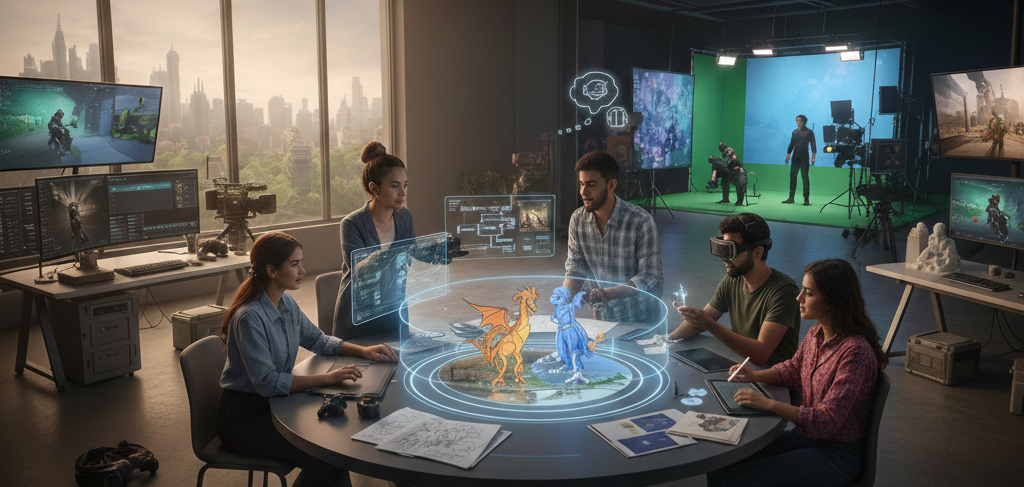
Something fascinating is happening in the creative industries right now: the walls between animation, gaming, and filmmaking are dissolving. And this convergence is creating opportunities that didn't exist just a few years ago.
The Blurring Lines
Watch a modern AAA game's cutscene, and try to distinguish it from a
Pixar film. Play through a narrative-driven game like The Last of
Us, and notice how it borrows cinematic storytelling techniques.
Look at how films like The Mandalorian use game engines for
production. The boundaries are becoming meaningless.
This isn't just interesting from a technical perspective—it's fundamentally changing what skills professionals need and what types of projects are possible.
Why This Matters for Your Education
If you're exploring animation courses in Gurgaon, this convergence
should influence your decision. The best programs are no longer
siloed into "animation track" or "game development track." They're
teaching a hybrid approach that acknowledges the interconnected
nature of these fields.
You need to understand cinematography even if you're making games. You need to know real-time rendering even if you're focused on film. You need storytelling skills regardless of your specific medium. The top institute in Gurgaon will recognize and teach to this reality.
Real-Time Everything
At the heart of this convergence is real-time technology. Game
engines designed for interactive experiences are now powering film
production. Animators are borrowing techniques from game developers.
Filmmakers are thinking about their work in terms of interactive
possibilities.
Unreal Engine 5.7's recent release epitomizes this trend. It's equally at home rendering a game, powering a virtual production stage, creating architectural visualizations, or producing animated films. One tool, infinite applications.
The New Professional
The professional who thrives in this convergence era looks different
from previous generations. They might be a "real-time
cinematographer" or a "narrative experience designer" or a "virtual
production artist"—roles that wouldn't have existed a decade ago.
These professionals combine skills from multiple disciplines. They understand game engine workflows, cinematic principles, animation fundamentals, and technical problem-solving. They're equally comfortable discussing frame rates and narrative arcs.
Practical Applications
Let's get concrete. A project might start as an animated short but
evolve into an interactive experience. A game cutscene might be
repurposed for a promotional film. A virtual production environment
created for one project might become the basis for a game level.
This fluidity means professionals need to think beyond traditional categories. When studying at animation institutes in Gurgaon, look for programs that encourage experimentation across different mediums and technologies.
The Toolkit Expansion
This convergence demands a broader toolkit. You're no longer just
learning Maya or just learning Unity. You're learning multiple tools
and, more importantly, understanding when to use each one. You're
developing the flexibility to move between different software and
pipelines as projects demand.
The best animation courses in Gurgaon teach tool-agnostic principles. Understanding the fundamentals of lighting, for instance, translates across any software or medium. Grasping storytelling principles works whether you're making a linear film or an interactive game.
Industry Impact
The animation and VFX market's projected growth to over $348 billion
by 2030 is driven largely by this convergence. Traditional
entertainment companies are becoming gaming publishers. Game studios
are producing films and series. Streaming platforms are investing in
interactive content.
For students, this creates an unprecedented opportunity. You're not choosing between film, games, or animation anymore—you're positioning yourself to work across all of them.
The Creative Opportunity
Perhaps most exciting is what this convergence means creatively.
Imagine telling a story that works as both a film and a playable
experience. Picture creating characters that live across multiple
mediums, each optimized for its platform but maintaining
consistency.
These aren't theoretical possibilities—they're happening right now. The Mitchells vs. The Machines had companion interactive experiences. Major franchises like Star Wars span films, games, and VR experiences. The boundary between watching and playing is becoming permeable.
Preparing for This Future
If you're serious about a career in these creative industries,
embrace the convergence. Don't limit yourself to one medium or one
toolset. Study cinematography and game design. Learn traditional
animation principles and real-time rendering. Understand
storytelling across different formats.
The professionals who will define the next decade of creative entertainment are those who can navigate fluidly between animation, gaming, and film. They're the ones who see these not as separate industries but as different facets of the same creative endeavor.
The future of creative entertainment isn't animation OR gaming OR film—it's animation AND gaming AND film, all flowing together into new forms we're just beginning to explore. And the training you receive at the top animation institutes in Gurgaon should prepare you for exactly that future.
Ready to Master the Convergence of Animation, Gaming, and
Film?
At Design Engine, we're preparing the next generation of creatives
for this integrated future. Our curriculum bridges traditional
animation, game development, and film production techniques, giving
you the versatile skills needed to thrive in the convergence era.
Take the next step:
Enroll today and learn how to create across all mediums—from
animated films to interactive games and beyond.
Your journey into the future of entertainment starts here —
Admissions Open.